There’s a lot of buzz right now about private equity in our industry. If you own a shop doing decent revenue, there’s a good chance someone has already reached out about “exploring a partnership” or “unlocking the value of your business.”
I get the appeal. You’ve been at this for 15, 20, maybe 30 years. You’re tired. The idea of someone handing you a check and taking the weight off your shoulders sounds pretty good. I’m not here to tell you that selling is always the wrong move. But I am here to tell you this: in my experience, most shop owners are much better off fixing the business first — and the person who can do that is you.
Nobody Pays for Potential
Here’s what I’ve seen over and over: when a buyer looks at your shop, they’re not paying for what it could be. They’re paying for what it is today. Your books, your margins, your maintainable cash flow. That’s the number they put through a formula.
There’s no premium for the reputation you built. No premium for the relationships in the community. No “blue sky” for the shop’s potential if someone ran it differently. A buyer is looking at today’s earnings and applying a multiple. That’s it.
So if your shop isn’t running at its best right now — if there’s revenue walking out the door that you’re not capturing — you’re going to sell at a number that reflects the broken version of your business, not the version you know it could be.
The Cash Flow You’re Walking Away From
Let’s do some simple math. Say your shop is generating $300,000 a year in owner earnings. A buyer offers you 3x — that’s $900,000. After taxes, you’re looking at somewhere around $675,000 to $720,000 in your pocket.
Now compare that to what happens if you keep the shop and fix what’s not working:
- Over 5 years at the same $300K: $1.5 million in earnings
- Over 10 years: $3 million — and that’s assuming zero growth
- Grow that number by even 15–20% through better process and you’re north of $3.5 million over a decade
You’d be trading years of cash flow for a one-time check that doesn’t come close. And here’s the part that really gets me: whoever buys your shop is going to make the same improvements you could have made — and they’re going to keep that upside for themselves.
You Can Fix This — I’ve Seen It
I work with shops every day that are sitting on way more potential than they realize. Most of them aren’t struggling because the market is bad or because they don’t have enough car count. They’re leaving money on the table because they don’t have the right process in place.
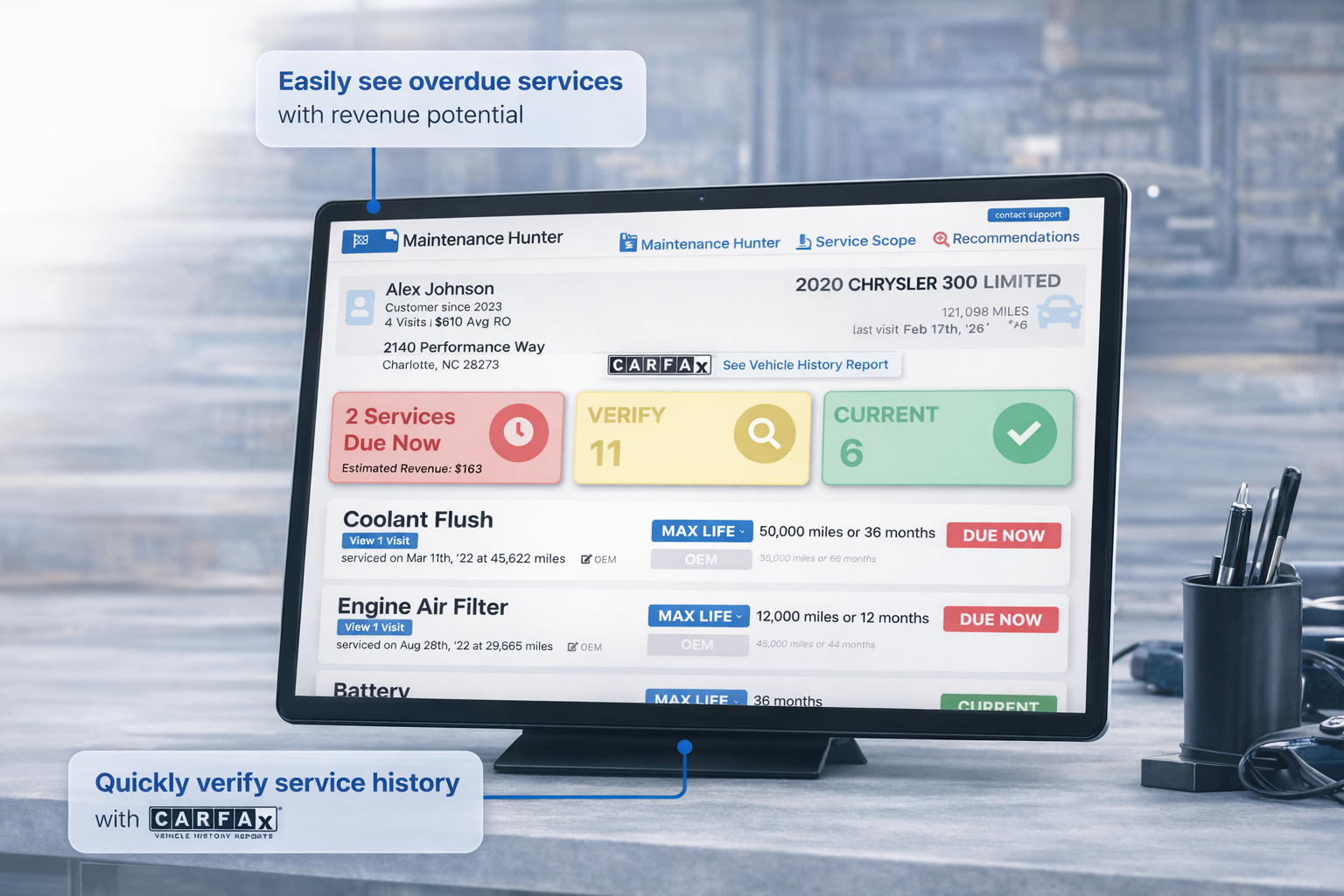
We work with a single-location franchise that proved this. They didn’t add bays, didn’t hire more techs, didn’t launch a marketing campaign. They changed one thing: when their advisors look at maintenance. Instead of treating it as an afterthought at checkout, they started leading with maintenance at write-up — checking service history against manufacturer schedules before the estimate was even written.
Monthly sales went from $53,600 to $141,500. Average repair order jumped from $264 to $568. That’s nearly $88,000 a month in additional revenue that was already walking through the door — they just weren’t capturing it.
If that shop had sold before making that change, they would have sold on $53,000-a-month numbers. Think about what that means. The buyer would have made the same process improvement, captured that same $88,000 a month, and kept every dollar of it.
The person who can fix your business is you. You know your customers. You know your team. You know your market better than any outside buyer ever will. What you might be missing is the process and the data to capture the revenue that’s already there.
What a Buyer Really Does After They Buy
In my experience, here’s what typically happens after a shop changes hands. The new owners come in and get systematic. They standardize the write-up process. They put data in front of the advisors. They track what’s recommended versus what’s sold. They hold people accountable to a consistent process.
Sound familiar? It should. That’s exactly what I’ve been coaching shop owners to do for more than 30 years. The difference is the buyer does it with your shop, on your customers, using your team — and they keep the profit.
Meanwhile, you’re on the sidelines. Often with a non-compete that keeps you out of the industry for years. In the only market where you have relationships. Watching someone else run the playbook you could have run yourself.
Build a Business That Works Without You
The real reason most shop owners start thinking about an exit isn’t the money. It’s the exhaustion. You’re the first one in and the last one out. You can’t take a week off without the phone blowing up. The business runs because you run it, and you’re running out of steam.
I hear you. But the answer isn’t to sell at a discount because you’re burned out. The answer is to build a business that doesn’t need you in the shop every day. Develop your store manager into a true operator. Put systems in place so the process runs the same whether you’re there or not. Use data to manage by exception instead of managing by walking around.
When you do that, your cash flow goes up and your business becomes less dependent on you. And that’s when you have real options.
Create Your Own Exit — On Your Terms
Once your shop runs well without you grinding every day, the world opens up. You can bring in a partner who shares your values. Promote your best manager into an ownership role with a structured buyout over time. Set up a succession plan that keeps the culture alive, keeps cash flowing to you for years, and gives your people a future they’re invested in.
Or, if selling is genuinely the right path for you, sell from a position of strength — with higher earnings, a stronger team, and a better multiple. On your timeline, not someone else’s.
Either way, you’re in control. And that’s the whole point.
The Bottom Line
If you’re thinking about selling your shop, I’d encourage you to ask yourself one question first: have I gotten everything I can out of this business?
In my experience, the answer is almost always no. There’s revenue walking through your door right now that you’re not capturing. There’s a version of your business that generates significantly more cash flow, runs without you being there every day, and gives you the freedom you’re looking for — without giving up ownership.
Nobody is going to pay you for your shop’s potential. They’re going to pay you for what’s on the books today. So before you take that meeting, fix the business first. The person who can do that — better than any outside buyer — is you.
Related: From 3 Stores to 30: Scaling with Data • The District Manager's Guide to KPIs • Enterprise Analytics Dashboard