An oil change seems like the simplest service you offer. A customer rolls in, you drain the old oil, drop in the new stuff, replace the filter, and they’re on their way. Fifteen, maybe twenty minutes of work. A quick win on the board.
But here’s what I’ve learned in more than 30 years in this industry: that oil change isn’t simple at all. It’s actually a gift—and most shop owners have no idea how to unwrap it.
The Oil Change as Your Gateway Service
Let me reframe this for you. When a customer brings their vehicle in for an oil change, they’re not just handing you an easy task. They’re handing you access. They’re voluntarily putting their car under your hands, which means they trust you. They’re in your shop. And statistically, they have maintenance that needs attention—tires are wearing, brakes need checking, filters are clogged, fluid levels are off.
The gift is the conversation you can now have.
Think about it: most customers don’t know what’s due on their vehicle. They don’t know when their transmission fluid was last changed. They don’t track their tire rotation. They came in for the oil because that’s the only service they’ve heard about, or it’s the only thing their vehicle’s reminder system flagged. But while you’re under the hood, you see everything. That’s your moment.
The 5-Step Oil Change Process That Works
To unwrap that gift properly, you need a process. Not to make things complicated, but to make sure you’re capturing every opportunity without dropping the ball. Here’s the framework I’ve seen work across hundreds of shops:
1. Schedule and Set Expectations
When the customer books the appointment, you’re already framing the visit. This is your chance to let them know you’ll be performing a thorough inspection while you’re in there. Set that expectation early. No one gets surprised by a recommendation later because they already know an inspection is part of your process.
2. Write-Up with Full Inspection
When the customer arrives, your tech doesn’t just grab the oil cap and get to work. They do a write-up. They check tire pressure and condition. They look at brake pads. They note filter status. They review fluid levels. They document what they see. This isn’t extra work—it’s being thorough, which is what professionals do.
3. Perform Service and Document Findings
While performing the oil change, your tech continues to inspect. They take photos of what they find. They document condition. If something looks questionable—a tire tread that’s borderline, a brake pad with life left but not much—they capture it. This is your evidence for the conversation ahead.
4. Quality Check Before Handoff
Before the vehicle goes to checkout, someone verifies the work. Oil level good. Filter secure. No leaks. Documentation complete. This keeps mistakes out of your shop and builds trust with your customer. A quality check takes three minutes and prevents the kind of callbacks that damage your reputation.
5. Checkout with Recommendations
This is where the gift gets unwrapped. At checkout, you present findings. Not as a hard sell—as education. “Your tires are at about 50% tread. They’re still good for maybe another 20,000 miles, but I wanted to flag it so you can plan ahead.” “Your brake pads are fine, but I’m seeing some uneven wear on the front left. That could mean your alignment’s off. Want me to check?” These conversations happen naturally because your tech has done the work to back them up.
From Service to Profit
Now let’s talk money, because that’s the reality of running a shop. An oil change alone has razor-thin margins. Maybe you’re hitting $25 to $50 in gross profit if you’re lucky. But what happens when you follow this process?
That customer came in for a $30 service and now you’re talking about tire rotation, brake inspection, transmission fluid service, or an alignment check. Not because you’re pushy—because you’ve done the inspection and you have real recommendations backed by what you actually saw. Your average invoice goes from $30 to $120, $150, maybe $200. That’s not upselling. That’s professional maintenance work.
And here’s the thing: when you do this right, customers feel taken care of. They come back. That oil change customer becomes a regular. They bring their second vehicle. They refer their friends. The lifetime value of one oil change customer treated this way is thousands of dollars.
The Conversation Is Everything
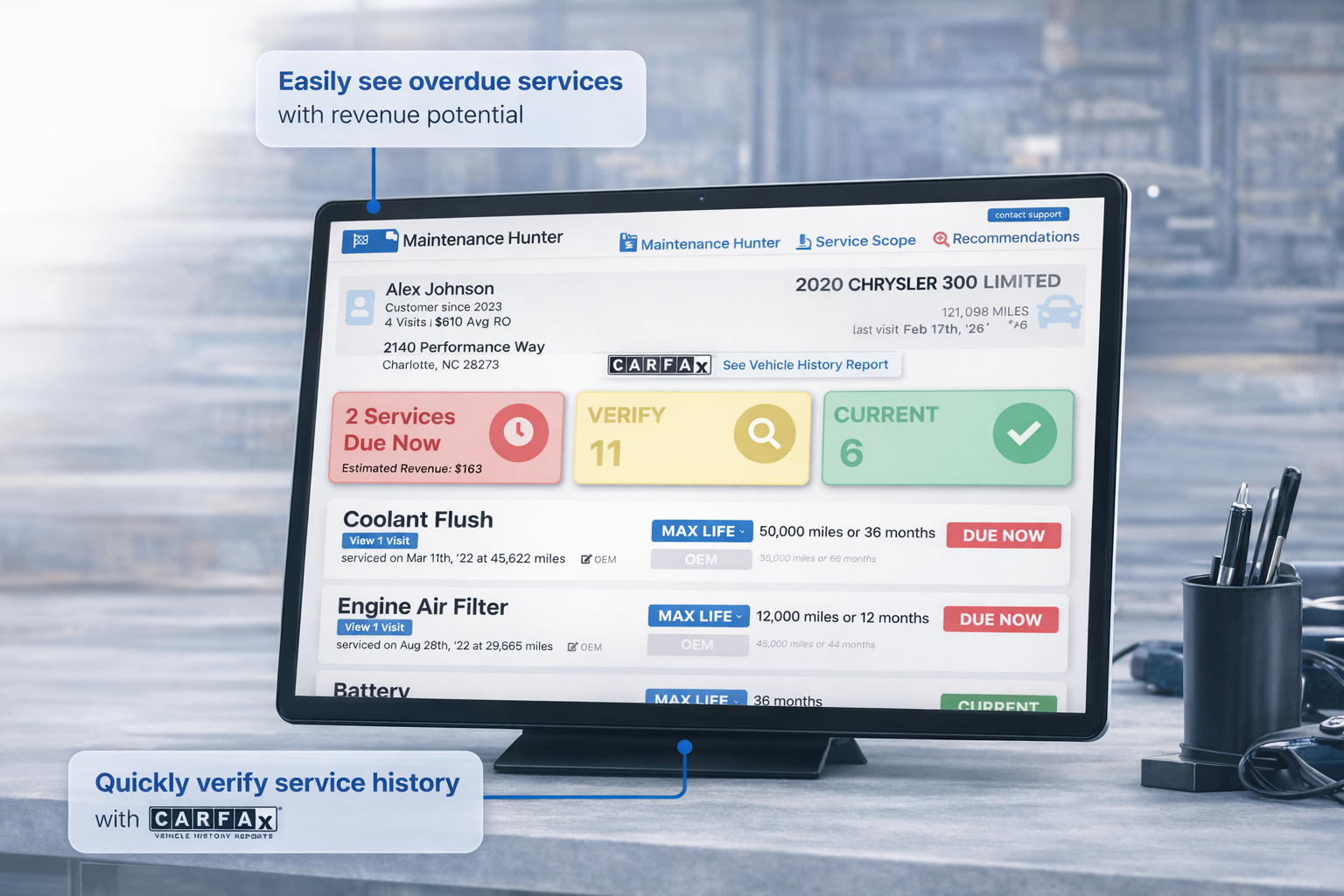
But none of this works if you don’t know what’s actually due. And that’s where most shops fall short. A tech might remember that brakes are important to check, but do they know what’s due on this specific vehicle. Have the transmission fluid and spark plugs been serviced. Is it time for a power steering flush. Without that information, even the most thorough inspection feels random.
This is why the maintenance conversation matters so much. You need to know what’s due—not based on guesses, but based on the manufacturer schedule and the vehicle’s actual history. When your tech walks to the checkout and says, “Your owner’s manual calls for a transmission service at 60,000 miles, and you’re at 58,000. We should schedule that while you’re here,” that’s not a pitch. That’s a professional recommendation.
The Bottom Line
The oil change is your most powerful tool. It’s the appointment that gets customers in the door. It’s the service they expect, which means they’re not defensive about it. And while they’re sitting in your waiting room, you’ve got their vehicle, their trust, and a complete view of everything that needs attention.
Treat it like a gift, not a chore. Follow a process. Do a real inspection. Document what you find. Have the maintenance conversation. Your average invoice goes up. Your customer satisfaction improves. Your retention improves. And your shop becomes the place people want to bring their vehicles.
If you’re not doing this now, start today. And if you need help knowing what’s actually due on every vehicle—so your techs and service advisors have the right information at the right time—take a look at SideKick360. Our Maintenance Hunter feature surfaces what’s due on every vehicle in four seconds. No guessing. No missed opportunities. Just solid recommendations backed by real data.
That’s how you unwrap the gift.
Related: Why Every Vehicle Deserves an Inspection • 5 Signs Your Shop Is Leaving Money on the Table • Multi-Unit Analytics